

What Is SEO?
Search Engine Optimization (SEO) is the process of improving a website so it appears higher in search engine results when people search for relevant topics, products, or services. The better your SEO, the more likely users are to discover your website through organic (unpaid) search results.
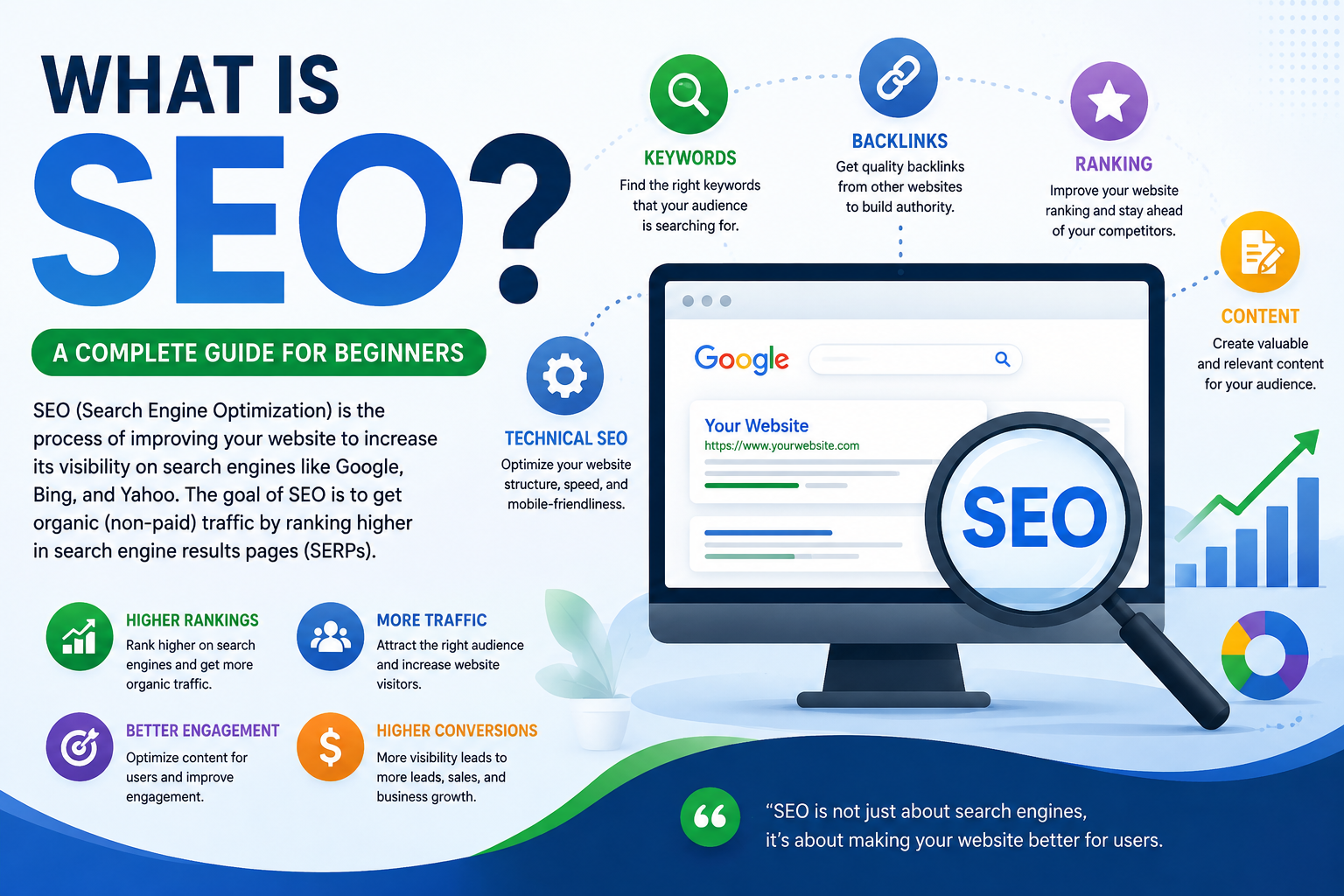
In today’s digital world, SEO is one of the most effective long-term marketing strategies. Instead of paying for every visitor through advertising, SEO helps you attract consistent, high-quality traffic naturally.
Whether you own a business, manage a blog, run an online store, or create educational content, learning SEO can significantly improve your online visibility.
Why Is SEO Important?
Millions of searches are performed every day on search engines. Most users click one of the first few results they see. If your website doesn’t appear near the top, you could be missing valuable visitors and potential customers.
SEO helps you:
- Increase website traffic
- Improve brand visibility
- Build trust and authority
- Generate more leads
- Increase online sales
- Reach your target audience
- Improve user experience
- Achieve long-term marketing success
Unlike paid advertisements, SEO continues to deliver results long after your content is published.
How Search Engines Work
To understand SEO, it’s important to know how search engines operate.
1. Crawling
Search engines use automated programs called crawlers or spiders to discover pages across the internet.
2. Indexing
After discovering a page, the search engine stores and organizes its content in a massive database called the index.
3. Ranking
When someone performs a search, search engines analyze hundreds of ranking factors to determine which pages provide the best answer.
The goal of SEO is to help your website perform better during this ranking process.
Types of SEO
1. On-Page SEO
On-page SEO focuses on optimizing the content and structure of individual pages.
Examples include:
- Writing keyword-rich titles
- Creating quality content
- Using proper heading tags
- Optimizing images
- Internal linking
- Improving readability
- Writing compelling meta descriptions
2. Off-Page SEO
Off-page SEO involves activities performed outside your website to improve authority.
Examples include:
- Building quality backlinks
- Guest posting
- Brand mentions
- Social media promotion
- Digital PR
High-quality backlinks remain one of the strongest ranking signals.
3. Technical SEO
Technical SEO improves your website’s infrastructure.
Important elements include:
- Fast loading speed
- Mobile-friendly design
- Secure HTTPS connection
- XML sitemap
- Robots.txt optimization
- Canonical tags
- Structured data
- Crawlability
- Indexability
4. Local SEO
Local SEO helps businesses appear in location-based searches.
Examples:
- Restaurants
- Clinics
- Salons
- Retail stores
- Service providers
Local SEO includes:
- Business profile optimization
- Local citations
- Customer reviews
- Local keywords
- Location pages
How SEO Works
SEO combines multiple strategies.
The process usually involves:
- Keyword research
- Competitor analysis
- Content creation
- Technical optimization
- Link building
- Performance monitoring
- Regular updates
Together, these activities help improve rankings over time.
Keyword Research
Keywords are the search terms users type into search engines.
Examples:
- What is SEO
- SEO tutorial
- SEO tips
- Learn SEO
- Beginner SEO guide
Choose keywords that are relevant, have search demand, and match user intent.
Search Intent
Understanding search intent is critical.
There are four common types:
Informational
The user wants information.
Example:
“What is SEO?”
Navigational
The user wants a specific website.
Commercial
The user is comparing products or services.
Transactional
The user intends to buy or sign up.
Your content should match the user’s intent to improve rankings and engagement.
Essential On-Page SEO Checklist
Every article should include:
- Primary keyword in the title
- Keyword in the first paragraph
- Proper H1, H2, and H3 headings
- Internal links
- External references where appropriate
- Optimized images
- Descriptive alt text
- Short paragraphs
- Bullet lists
- Mobile-friendly formatting
- Strong conclusion
Content Is the Foundation of SEO
High-quality content remains the most important SEO factor.
Great content should be:
- Helpful
- Original
- Accurate
- Easy to understand
- Well-structured
- Updated regularly
Avoid copying content from other websites.
Instead, provide unique insights, examples, and practical guidance.
Image SEO
Images also contribute to search visibility.
Best practices:
- Compress images
- Use descriptive file names
- Add keyword-rich alt text
- Choose appropriate dimensions
- Use modern image formats where possible
Example Alt Text:
“SEO optimization checklist for beginners”
Internal Linking
Internal links connect pages within your website.
Benefits include:
- Better navigation
- Improved crawling
- Increased page authority
- More page views
- Better user experience
Always link to relevant articles naturally.
External Links
Linking to trustworthy resources can improve credibility.
Only use reliable and relevant sources that genuinely help readers.
Website Speed
Fast websites provide a better user experience.
Improve speed by:
- Compressing images
- Enabling browser caching
- Using a CDN
- Reducing unnecessary scripts
- Choosing quality hosting
Page speed affects both rankings and user satisfaction.
Mobile SEO
Most users browse on smartphones.
Your website should:
- Load quickly
- Display correctly on all screen sizes
- Use readable fonts
- Have clickable buttons
- Avoid intrusive pop-ups
User Experience (UX) and SEO
Search engines reward websites that users enjoy.
Good UX includes:
- Clear navigation
- Fast loading
- Helpful content
- Logical page structure
- Accessible design
- Easy-to-read formatting
Backlinks Explained
A backlink is a link from another website pointing to yours.
Quality matters more than quantity.
Earn backlinks by:
- Publishing excellent content
- Creating useful guides
- Original research
- Infographics
- Guest blogging
- Building relationships in your niche
Common SEO Mistakes
Avoid these common errors:
- Keyword stuffing
- Duplicate content
- Slow websites
- Broken links
- Missing title tags
- Poor meta descriptions
- Thin content
- Ignoring mobile users
- Low-quality backlinks
- Outdated content
SEO Tools
Popular SEO tools include:
- Google Search Console
- Google Analytics
- Ahrefs
- Semrush
- Moz
- Screaming Frog SEO Spider
- SE Ranking
- Mangools
- BrightLocal
- Google Keyword Planner
These tools help monitor rankings, analyze traffic, identify technical issues, and discover keyword opportunities.
SEO Trends for 2026
SEO continues to evolve.
Key trends include:
- AI-assisted content creation with human editing
- Greater focus on content quality and originality
- Improved page experience
- Structured data implementation
- Voice search optimization
- Visual search optimization
- Helpful, experience-based content
- Strong topical authority
- Faster websites
- Better accessibility
Businesses that adapt to these trends are more likely to remain competitive.
Benefits of SEO
Investing in SEO offers many advantages:
- Free organic traffic
- Higher search visibility
- Better credibility
- Increased conversions
- Long-term results
- Strong return on investment
- Better user experience
- Sustainable business growth
Is SEO Better Than Paid Advertising?
SEO and paid advertising serve different purposes.
Paid ads can deliver immediate traffic, while SEO builds long-term visibility and organic growth. Many successful businesses use both strategies together.
Frequently Asked Questions
Is SEO free?
You can implement many SEO practices yourself without paying for ads, though professional tools and expert assistance may involve costs.
How long does SEO take?
SEO is a long-term strategy. Meaningful improvements often take several months, depending on your competition and the quality of your optimization.
Can beginners learn SEO?
Yes. With consistent learning and practice, anyone can understand and apply SEO principles.
Does SEO still work in 2026?
Absolutely. SEO remains one of the most effective digital marketing strategies because people continue to use search engines to find information, products, and services.
Final Thoughts
SEO is much more than adding keywords to a page. It involves creating valuable content, improving website performance, understanding user intent, and building authority over time. By focusing on quality, technical excellence, and a positive user experience, you can increase your visibility in search results and attract sustainable organic traffic.
Whether you’re launching your first blog or managing an established business website, investing in SEO is one of the smartest decisions you can make for long-term online success.