
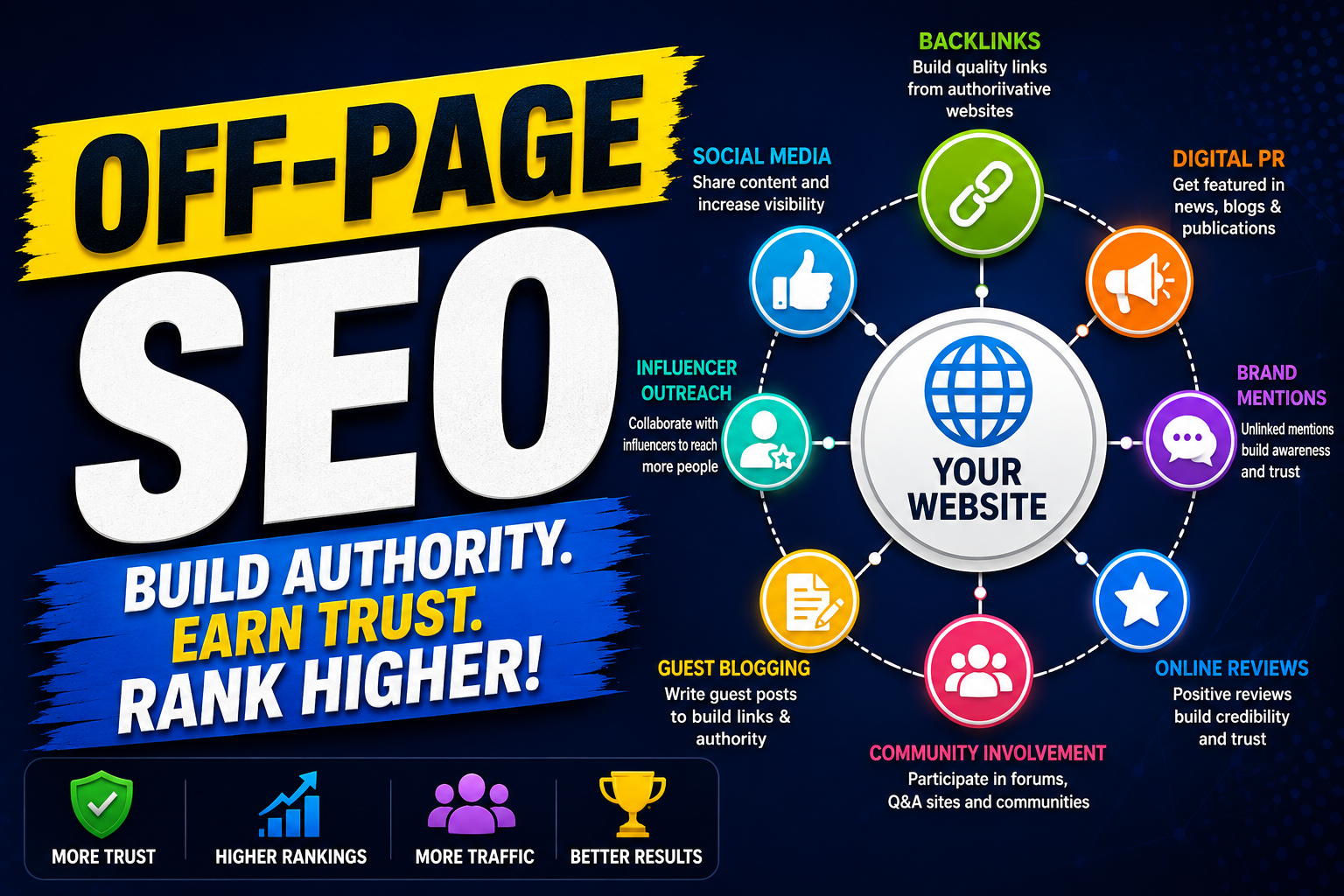
Off-page SEO is one of the most important parts of search engine optimization. While on-page SEO focuses on improving the content and structure of your own website, off-page SEO focuses on activities outside your website that can improve its visibility, reputation, authority, and ability to attract relevant visitors.
A strong off-page SEO strategy can help a website earn attention from other websites, publishers, communities, customers, and search engines. However, successful off-page SEO is not simply about collecting as many backlinks as possible.
Google’s current guidance emphasizes helpful, reliable, people-first content and warns against tactics designed primarily to manipulate rankings. Google also identifies buying links for ranking purposes, excessive link exchanges, automated link creation, and other manipulative link practices as link spam.
This guide explains off-page SEO from beginner to advanced level, including backlinks, digital PR, local citations, social promotion, brand mentions, link building, outreach, common mistakes, and a practical strategy you can follow.
What Is Off-Page SEO?
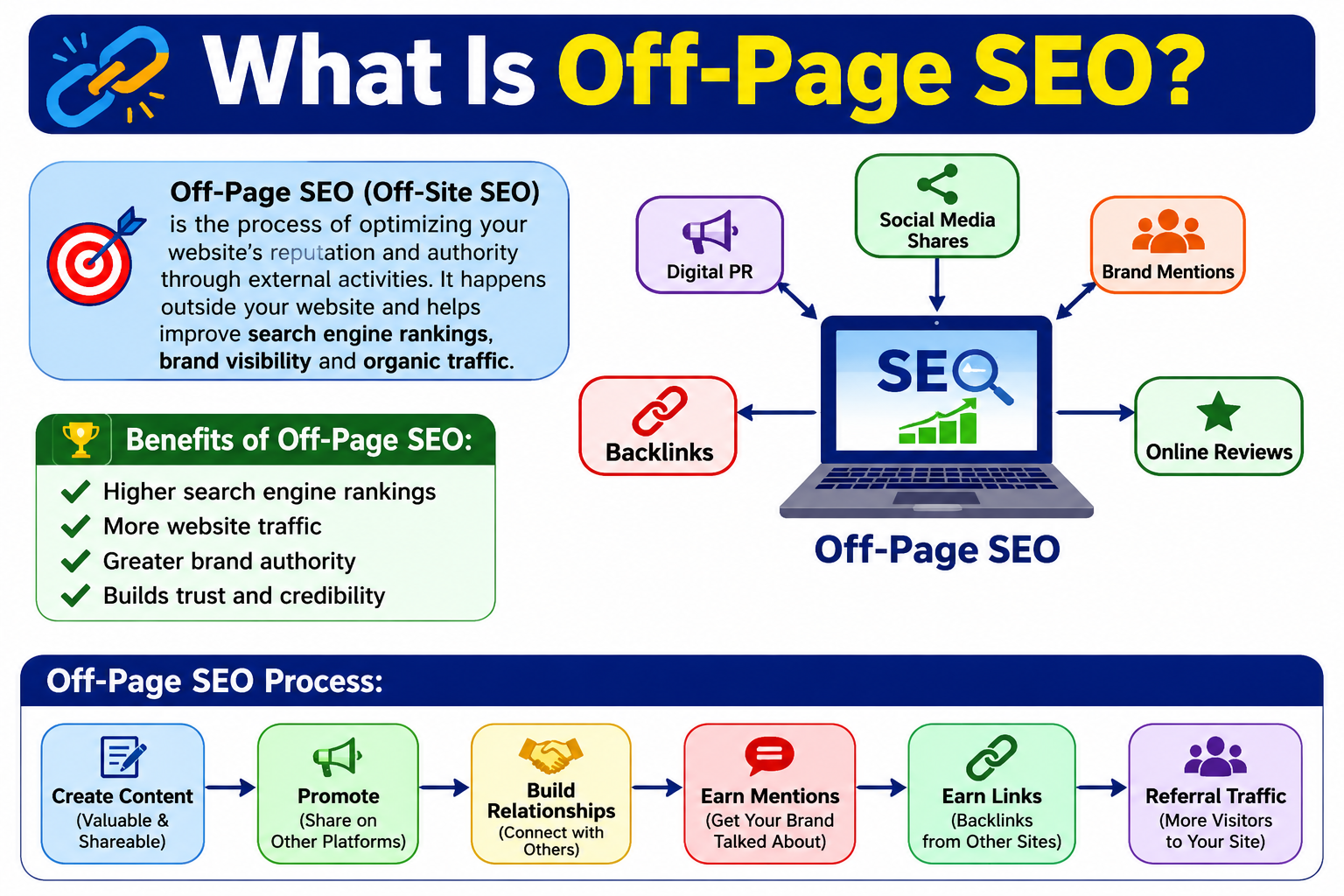
Off-page SEO refers to activities performed outside your website to improve its reputation, visibility, authority, and discovery in search engines.
Examples include:
- Earning backlinks from relevant websites
- Digital PR
- Brand mentions
- Guest contributions on reputable publications
- Local citations
- Business directories
- Industry relationships
- Content promotion
- Community participation
- Reviews and reputation management
- Linkable assets
- Public relations campaigns
- Expert interviews
- Original research and data promotion
The basic idea is simple:
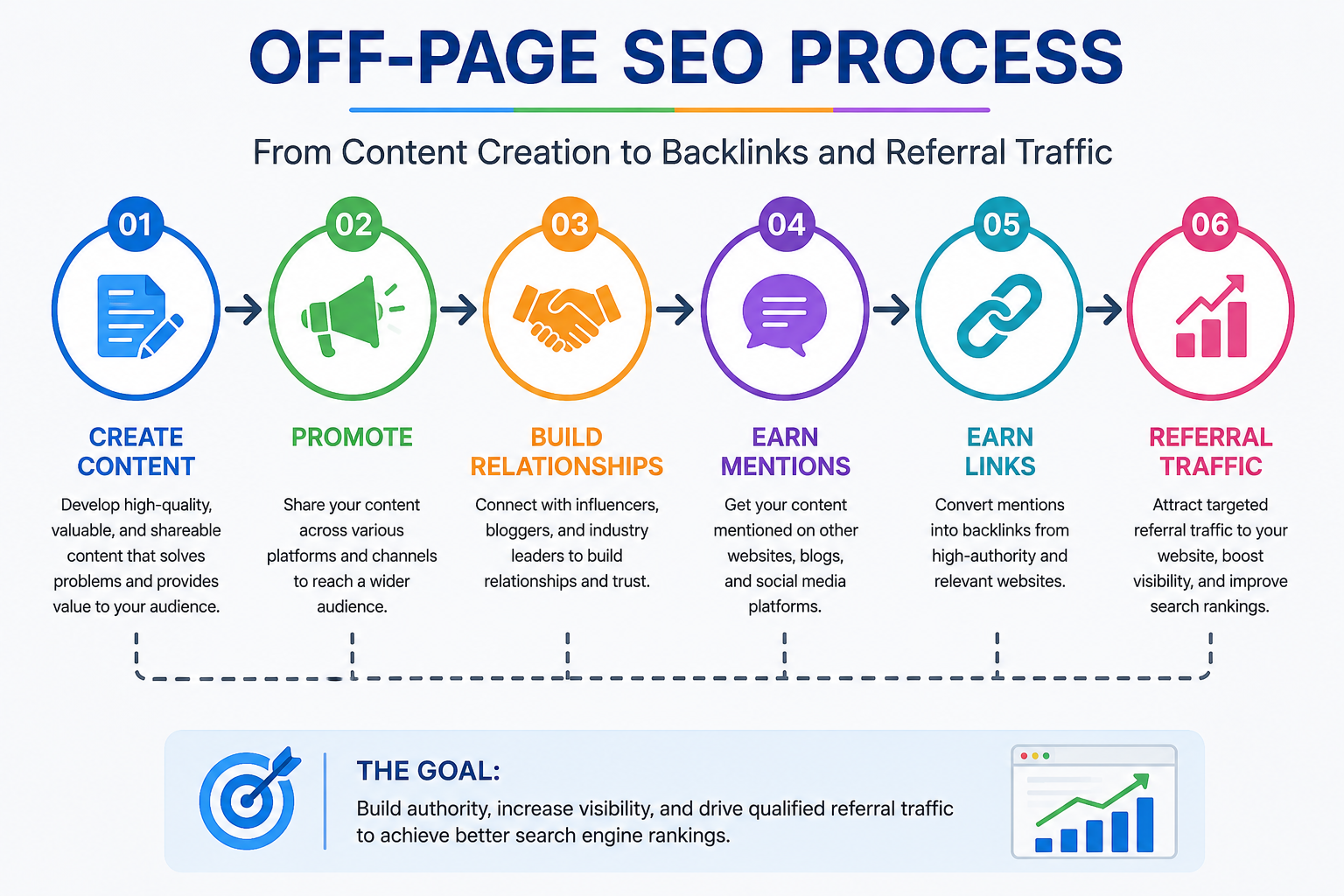
Create something valuable → promote it to the right people → earn attention, mentions, referrals, and relevant links.
Google explains that links can help it discover pages and understand relationships between pages, while its Search Essentials also recommends telling people about your site and being active in relevant communities.
On-Page SEO vs Off-Page SEO
SEO can be divided into several connected areas.
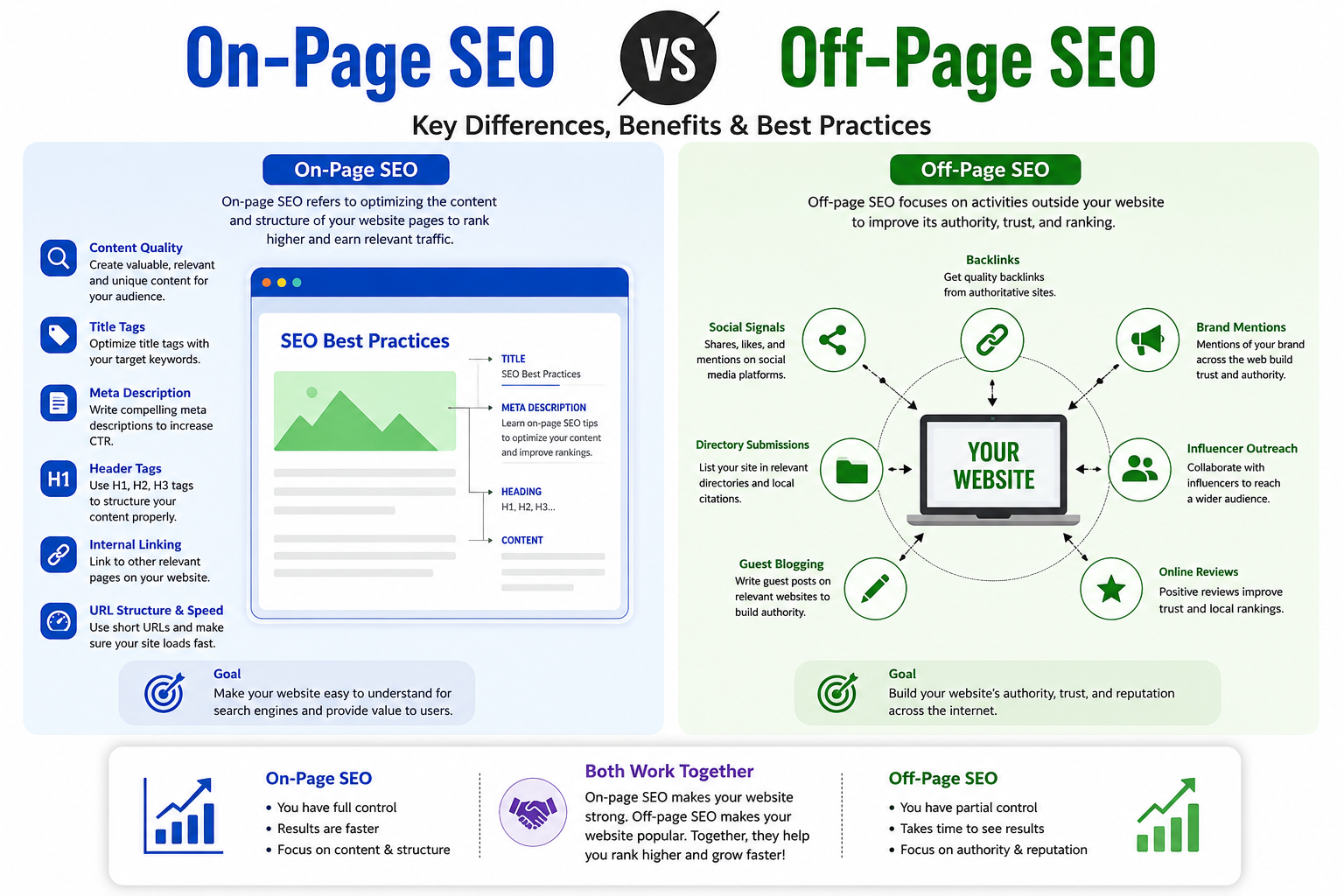
| SEO Type | Main Focus | Examples |
|---|---|---|
| On-Page SEO | Your website content | Keywords, headings, content, internal links |
| Technical SEO | Website infrastructure | Speed, crawling, indexing, mobile usability |
| Off-Page SEO | External signals and promotion | Backlinks, PR, mentions, citations |
| Local SEO | Local visibility | Business Profile, reviews, citations |
| Content SEO | Content quality and topical coverage | Guides, research, tutorials |
Think of your website as a business.
On-page SEO improves the store itself.
Technical SEO makes the store easy to access.
Off-page SEO helps more people discover, recommend, and talk about the store.
Why Is Off-Page SEO Important?
A website can publish excellent content and still struggle to attract attention.
Off-page SEO can help by creating pathways through which people discover your website.
For example:
Your website
↓
A blogger discovers your research
↓
The blogger references your research
↓
Readers visit your website
↓
Other publishers discover the research
↓
More relevant mentions and links may be earned
↓
Your content gains greater visibility
This does not mean that obtaining a particular number of backlinks guarantees a particular Google ranking. Google explicitly states that there are no secrets that automatically rank a website first.
The goal should therefore be earning genuine recognition, not manipulating search results.
What Are Backlinks?
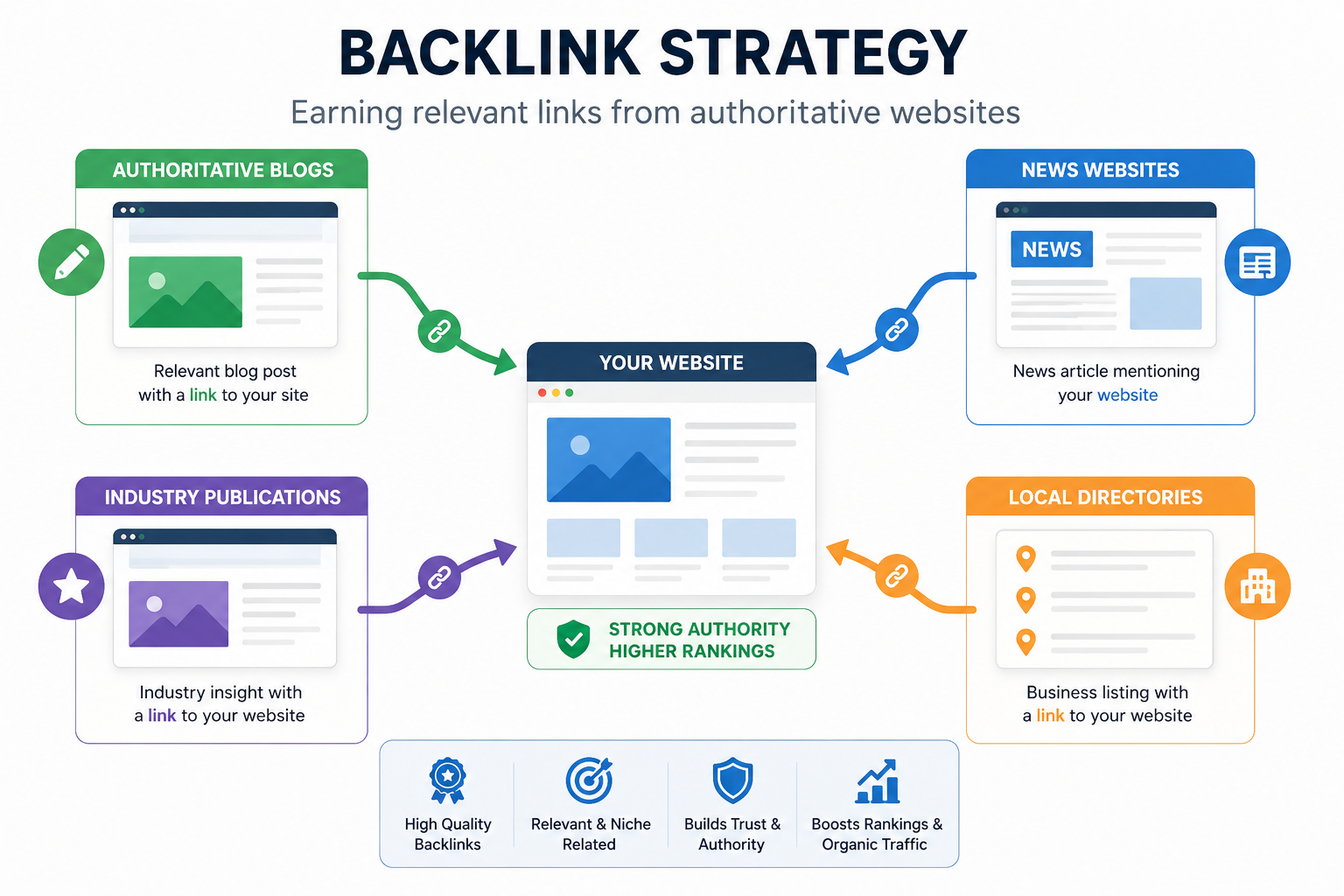
A backlink is a link from another website to your website.
For example:
A technology website publishes an article about WordPress and links to your detailed WordPress tutorial.
That link is a backlink to your website.
Backlinks can be useful for several reasons:
- They can send referral traffic.
- They can help users discover your content.
- They can help search engines discover pages.
- They can connect related resources across the web.
- They can contribute to the overall reputation and authority of a website.
Google says links are one way its systems discover new pages and understand relevance.
Are All Backlinks Equal?
No.
A backlink from a relevant, trusted publication can be much more useful than a random link from an unrelated website.
Consider two examples.
Example 1: Relevant backlink
Your website publishes an article about WordPress SEO.
A respected SEO publication references your article because it contains useful information.
This is a natural and relevant relationship.
Example 2: Irrelevant backlink
A random website about an unrelated topic suddenly creates hundreds of pages linking to your SEO article.
This provides little meaningful value and may be part of a manipulative link scheme.
The lesson is:
Focus on relevance, usefulness, editorial context, and genuine relationships rather than backlink quantity.
Types of Off-Page SEO
1. Link Building
Link building is the process of earning or acquiring links from other websites.
However, modern link building should focus primarily on earning valuable references rather than manufacturing links.
Good link opportunities can come from:
- Original research
- Useful statistics
- Detailed guides
- Free tools
- Calculators
- Templates
- Case studies
- Expert commentary
- Original graphics
- Industry reports
- Helpful resources
For example, if you publish a comprehensive WordPress SEO checklist, other bloggers may reference it as a resource.
2. Digital PR
Digital PR combines public relations with online marketing.
Instead of directly asking hundreds of websites for backlinks, you create something interesting enough for journalists, bloggers, publishers, and industry professionals to discuss.
Examples include:
- Original research
- Industry surveys
- New statistics
- Expert analysis
- Trends reports
- Data studies
- Newsworthy announcements
- Expert commentary
Example
Suppose you operate an SEO website.
You survey 500 small businesses about their SEO challenges.
You publish:
“2026 Small Business SEO Challenges Report”
You then contact relevant journalists and publishers.
If the research is genuinely useful, some publications may reference your study.
That can generate:
- Brand exposure
- Referral traffic
- Mentions
- Natural backlinks
- New relationships
3. Brand Mentions
A brand mention occurs when another website or online platform talks about your company, product, website, or service.
For example:
“AI Landmark Solution publishes beginner-friendly WordPress tutorials.”
A mention may or may not include a hyperlink.
Brand awareness can still be valuable because people may search for your brand directly after discovering it.
4. Guest Contributions
Guest posting involves contributing useful, original content to another relevant publication.
The old approach was:
Publish hundreds of low-quality guest posts just to obtain links.
That is not a good strategy.
A better approach is:
Find respected websites with an audience relevant to your business and contribute genuinely useful material.
For example, an SEO professional might contribute an article about:
“How Small Businesses Can Build a Sustainable SEO Strategy.”
The purpose should be to educate the audience and build professional relationships—not manufacture links.
Google warns against paid or optimized guest-post links that pass ranking credit when they are used to manipulate rankings.
5. Local Citations
Local citations are online references to a business.
They may include information such as:
- Business name
- Address
- Phone number
- Website
- Business category
Citations can be useful for businesses serving a particular geographic area.
Examples include:
- Local directories
- Industry directories
- Chambers of commerce
- Professional associations
- Local publications
- Relevant business listings
The important principle is consistency.
Make sure your business information is accurate across important platforms.
6. Reviews and Reputation
Online reviews are particularly important for local businesses.
Encourage genuine customers to provide honest feedback.
Do not:
- Buy fake reviews
- Create fake customer accounts
- Write reviews for yourself
- Manipulate ratings
Instead:
- Deliver a good service.
- Ask real customers for feedback.
- Make the review process easy.
- Respond professionally.
- Address legitimate complaints.
A strong reputation can support both visibility and customer trust.
7. Social Media Promotion
Social media links generally should not be treated as a simple “get backlinks and rank” tactic.
Instead, social platforms are valuable for content distribution and audience development.
You can use platforms such as:
- X
- YouTube
The strategy is:
Publish → distribute → engage → reach relevant people → earn attention → generate referrals and potential mentions.
For example, after publishing an SEO tutorial, you can create:
- A short LinkedIn summary
- A YouTube explanation
- A Facebook post
- A visual infographic
- A short video
- A Pinterest graphic
One article can therefore become multiple promotional assets.
8. Community Participation
Online communities can help establish expertise and attract interested visitors.
Examples include:
- Industry forums
- Reddit communities
- Professional groups
- Q&A platforms
- WordPress communities
- Developer communities
- Local business groups
Do not spam links.
Instead:
- Read the discussion.
- Understand the question.
- Provide a useful answer.
- Add a link only when it genuinely helps.
Google’s Search Essentials specifically encourages site owners to tell people about their websites and participate in relevant communities.
9. Resource Link Building
Resource pages collect useful websites or resources around a topic.
For example:
“50 Best WordPress Resources for Beginners”
If you have a genuinely useful WordPress tutorial, it may be appropriate to contact the publisher and explain why your resource could help their readers.
Avoid sending generic mass emails.
Personalized outreach works better.
10. Broken Link Opportunities
Broken-link outreach involves finding an outdated or broken resource on a relevant website and suggesting a useful replacement.
For example:
A technology website has:
“Learn WordPress SEO here”
but the linked page no longer works.
If you have a genuinely useful replacement, you can contact the website owner.
Your message might explain:
“I noticed that one of the resources in your WordPress guide no longer appears to be available. I recently published a detailed guide covering the same topic, if you’d like to consider it as an alternative.”
The website owner decides whether to replace the link.
11. Unlinked Brand Mentions
Sometimes a website mentions your business but does not link to your website.
For example:
“AI Landmark Solution recently published a detailed guide to WordPress plugins.”
You can politely contact the publisher and ask whether they would consider linking the brand mention to the relevant page.
This can be a useful outreach opportunity because the publisher already knows about your brand.
12. Expert Interviews
Being interviewed by relevant websites, podcasts, newsletters, or industry publications can increase visibility.
You can participate in:
- Podcasts
- Expert roundups
- Interviews
- Webinars
- Industry panels
- Online events
The primary benefit is exposure and credibility.
A relevant publication may also reference your website.
13. Create Linkable Assets
One of the strongest long-term off-page strategies is to create something people naturally want to reference.
Examples:
Free tools
- SEO calculator
- Keyword calculator
- Website speed checker
- Meta description generator
Research
- Industry survey
- Annual report
- Original statistics
Visual resources
- Infographics
- Charts
- Diagrams
- Checklists
Educational resources
- Ultimate guides
- Templates
- Tutorials
- Glossaries
The more useful and distinctive the asset, the easier it can be to promote.
Off-Page SEO Strategy: Step-by-Step
Step 1: Build a Strong Website First
Before pursuing backlinks, make sure your website is worth recommending.
Check:
- Content quality
- Website speed
- Mobile experience
- Navigation
- Internal links
- Contact information
- About page
- Author information
- Trust signals
- Security
- Clear branding
Google recommends creating helpful, reliable, people-first content rather than content primarily designed to manipulate search rankings.
Step 2: Publish Valuable Content
Create content that solves real problems.
Instead of:
“SEO Tips”
create:
“Complete Off-Page SEO Strategy for Small Businesses: A Step-by-Step Guide”
Include:
- Examples
- Screenshots
- Original explanations
- Practical steps
- Data
- Checklists
- FAQs
- Visuals
The content should be good enough that another website would feel comfortable recommending it.
Step 3: Find Your Linkable Topics
Ask:
What information could other websites reference?
For example:
| Content Type | Link Potential |
| Original research | High |
| Free tool | High |
| Industry statistics | High |
| Comprehensive guide | High |
| Original case study | High |
| Useful template | High |
| Generic 500-word article | Usually lower |
These are general strategic assessments, not guaranteed ranking outcomes.
Step 4: Research Relevant Websites
Find websites that:
- Cover your industry
- Have a relevant audience
- Publish quality content
- Have real editorial standards
- Are not obvious link farms
Look for websites where your content would genuinely help readers.
Step 5: Create Personalized Outreach
Avoid:
“Dear Sir/Madam, I have a high-quality website. Please give me a backlink.”
Instead:
“Hi [Name], I enjoyed your article about WordPress security. I noticed that you referenced several beginner resources. I recently published a practical WordPress security checklist covering backups, updates, login protection, and monitoring. If you think it would be useful for your readers, you’re welcome to consider it as an additional resource.”
This approach is more natural because it explains why the resource is relevant.
Step 6: Promote Your Content
After publishing an important article, don’t simply wait for Google.
Promote it through:
- Email newsletters
- Communities
- Industry contacts
- Relevant forums
- YouTube
- Partnerships
- Digital PR
Google itself recommends telling people about your site.
Step 7: Track Results
Use tools such as Google Search Console and analytics platforms to monitor performance.
Track:
- Organic clicks
- Impressions
- Search queries
- Referring websites
- Referral traffic
- Brand searches
- New backlinks
- Ranking changes
- Conversions
Google describes Search Console as a tool for understanding how your site performs in Google Search.
Off-Page SEO Funnel
A useful way to understand off-page SEO is as a funnel:
Content
↓
Promotion
↓
Audience exposure
↓
Brand awareness
↓
Mentions / references
↓
Relevant backlinks
↓
Referral traffic
↓
Potential business conversions
Not every campaign will produce every outcome, and there is no guaranteed ranking formula.
Illustrative Off-Page SEO Impact Graph
The following chart is an illustrative model, not measured Google ranking data. It demonstrates how a balanced off-page campaign can distribute effort across major activities.
The important point is that off-page SEO should not become a backlink-only campaign. Promotion, relationships, reputation, and content quality all matter.
A 90-Day Off-Page SEO Plan
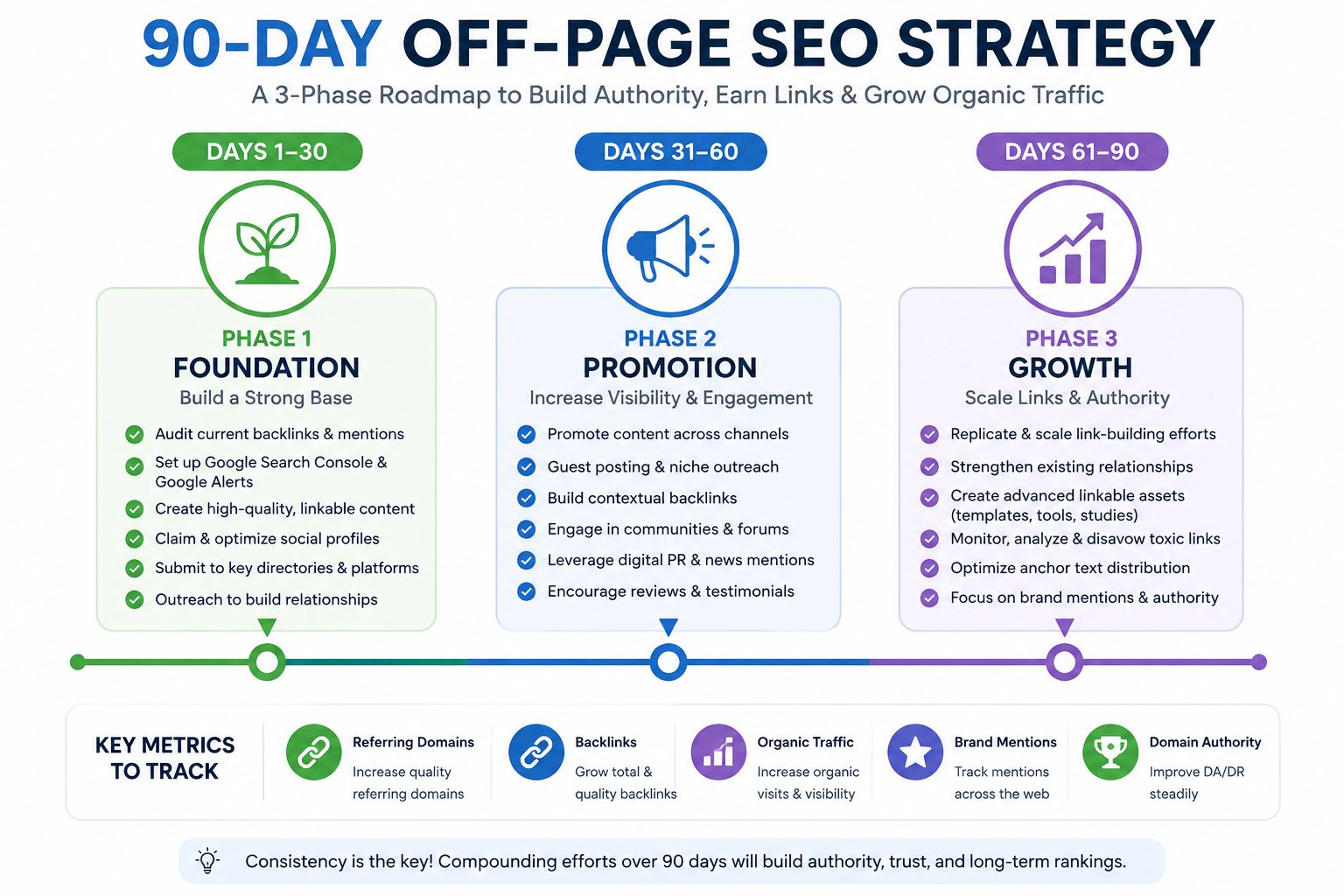
Month 1: Foundation
Week 1
- Audit existing backlinks
- Identify your strongest content
- Identify competitors
- Create a list of relevant websites
- Check brand mentions
Week 2
Create one strong linkable asset:
- Research report
- Ultimate guide
- Checklist
- Tool
- Original infographic
Week 3
Promote the asset through your social channels and professional network.
Week 4
Start personalized outreach to relevant websites.
Month 2: Promotion
Focus on:
- Guest contributions
- Digital PR
- Expert interviews
- Resource pages
- Community participation
- Unlinked mentions
- Partnerships
Don’t measure success only by the number of links.
Also track:
- Referral traffic
- Brand mentions
- New relationships
- Content engagement
- Search impressions
Month 3: Scale What Works
Review your results.
Ask:
- Which content attracted the most attention?
- Which websites responded?
- Which outreach messages worked?
- Which topics generated mentions?
- Which pages received referral traffic?
- Which relationships can be developed further?
Then invest more time in the channels that produce genuine value.
How Many Backlinks Do You Need?
There is no universal number.
A competitor may have thousands of backlinks, while another website may perform well with far fewer.
The quality, relevance, context, and overall website quality matter more than simply counting links.
Do not set a goal such as:
“I need 1,000 backlinks this month.”
Instead set goals such as:
“I want to earn references from 10 relevant industry publications.”
That is a much healthier approach.
What Is a Good Backlink?
A useful backlink generally has several positive characteristics:
- Comes from a relevant website
- Is placed in meaningful content
- Helps readers
- Comes from a real publication or organization
- Uses natural context
- Is editorially appropriate
- Can potentially send referral traffic
For example:
SEO website → SEO tutorial
is naturally more relevant than:
Unrelated website → SEO tutorial
What Is Bad Link Building?
Bad link building focuses on manipulating search rankings rather than helping users.
Examples include:
- Buying links specifically to manipulate rankings
- Automated backlink software
- Mass directory submissions
- Private link networks
- Excessive link exchanges
- Spam comments
- Forum spam
- Hidden links
- Low-quality link farms
- Mass-produced guest posts
- Artificially generated links
Google’s spam policies specifically identify buying or selling links for ranking purposes, excessive link exchanges, and automated link creation as examples of link spam.
Why Buying Backlinks Can Be Risky
Some SEO services promise:
“10,000 backlinks for $50.”
This sounds attractive but can create serious problems.
The links may come from:
- Irrelevant websites
- Automated pages
- Spam networks
- Low-quality directories
- Hacked websites
- Link farms
Google explicitly advises against link popularity schemes and large-scale search-engine submission schemes.
The objective should be earning valuable references, not purchasing artificial ranking signals.
What About Nofollow, Sponsored, and UGC Links?
Not every link should pass ranking credit.
Google provides link attributes that help website owners identify different relationships.
For example:
rel="sponsored"
Used for advertisements and paid placements.
rel="ugc"
Used for user-generated content such as forum posts and comments.
rel="nofollow"
Can be used when you don’t want to associate your site with the linked page or when appropriate under Google’s guidance.
Google recommends using sponsored for paid links, while nofollow remains an acceptable way to qualify certain links.
Off-Page SEO for Local Businesses
Local businesses should combine traditional off-page SEO with local SEO.
For example, a local restaurant could build visibility through:
- Local publications
- Business directories
- Food bloggers
- Community organizations
- Local events
- Genuine customer reviews
- Local partnerships
- Sponsorships
- Local news coverage
A local service company could work with:
- Industry associations
- Local chambers
- Community websites
- Relevant publications
- Suppliers
- Professional organizations
The objective is to become known within the relevant community, not simply to collect links.
Off-Page SEO for E-Commerce Websites
An online store can use:
Product reviews
Work with genuine reviewers and publications.
Digital PR
Promote original product research or industry trends.
Guides
Create helpful buying guides.
Comparisons
Publish useful product comparisons.
Data
Create original market statistics.
Partnerships
Develop relationships with relevant businesses and publishers.
For example, an e-commerce website selling computer accessories could publish:
“2026 Mechanical Keyboard Buying Guide”
and promote it to technology publications and communities.
Off-Page SEO for Bloggers
Bloggers can focus on:
- Publishing original content
- Building relationships with other bloggers
- Creating useful resources
- Participating in relevant communities
- Promoting articles on social media
- Creating expert roundups
- Producing original research
- Building an email audience
A small blog doesn’t need to compete with major websites immediately.
Instead, build authority around a focused topic.
How AI Can Help With Off-Page SEO
AI can make off-page SEO workflows faster, but it should support human judgment.
You can use AI to help:
- Research outreach prospects
- Organize prospect lists
- Generate outreach ideas
- Analyze competitor content
- Find content gaps
- Create PR angles
- Turn research into social posts
- Generate outreach drafts
- Categorize backlink opportunities
However, don’t use AI to mass-produce low-value content or automatically create thousands of backlinks.
Google’s guidance says using automation, including AI, to produce content primarily for manipulating search rankings violates its spam policies.
Use AI as an assistant—not as a spam machine.
Off-Page SEO Mistakes to Avoid
Mistake 1: Focusing Only on Backlinks
Off-page SEO is broader than backlinks.
Think about:
Links + reputation + relationships + promotion + mentions + referrals.
Mistake 2: Chasing Quantity
10 relevant references can be more useful to your business than hundreds of irrelevant links.
Mistake 3: Using Exact-Match Anchor Text Everywhere
Natural links can use different wording.
For example:
- Learn more
- Complete guide
- WordPress SEO guide
- This tutorial
- AI Landmark Solution
Don’t attempt to control every anchor text.
Mistake 4: Mass Guest Posting
Guest contributions should be useful to the publication’s audience.
Publishing essentially the same article across many websites can create quality problems.
Mistake 5: Ignoring Relevance
A link from a completely unrelated website is usually less meaningful than a relevant editorial reference.
Mistake 6: Using Automated Link Software
Automated backlink generation can produce large amounts of spam.
Google explicitly identifies automated programs or services used to create links as an example of link spam.
How to Measure Off-Page SEO
Create a monthly report containing:
| Metric | What It Tells You |
| New referring domains | New websites mentioning you |
| Backlinks | Links pointing to your website |
| Referral traffic | Visitors from external websites |
| Brand mentions | Online visibility |
| Organic impressions | Search visibility |
| Organic clicks | Search traffic |
| Brand searches | Growing brand awareness |
| Conversions | Business impact |
Don’t judge your campaign solely by backlink numbers.
Ultimately, the important question is:
Is your off-page strategy helping your business become more visible, trusted, discovered, and useful to the right audience?
Off-Page SEO Checklist
- Publish genuinely useful content
- Create linkable assets
- Research relevant websites
- Build industry relationships
- Promote your best content
- Use personalized outreach
- Pursue relevant digital PR opportunities
- Monitor brand mentions
- Maintain accurate local citations
- Encourage genuine reviews
- Participate in relevant communities
- Track referral traffic
- Monitor new referring domains
- Review backlink quality
- Remove or address obvious spam where appropriate
- Avoid paid links intended to manipulate rankings
- Avoid automated backlink generation
- Avoid excessive link exchanges
- Focus on people-first content
Final Thoughts
Off-page SEO is the process of building your website’s reputation and visibility beyond your own domain.
The strongest strategy is not:
“Get as many backlinks as possible.”
It is:
Create something valuable, make people aware of it, build genuine relationships, earn relevant references, and develop a reputation within your industry.
Google’s guidance consistently emphasizes useful, reliable, people-first content and warns against manipulative link practices.
If you are building a website today, start with a simple process:
1. Create excellent content → 2. Build useful resources → 3. Promote them → 4. Connect with relevant people → 5. Earn genuine mentions and links → 6. Measure results → 7. Improve and repeat.
That approach makes off-page SEO a long-term marketing strategy rather than a short-term backlink campaign.