
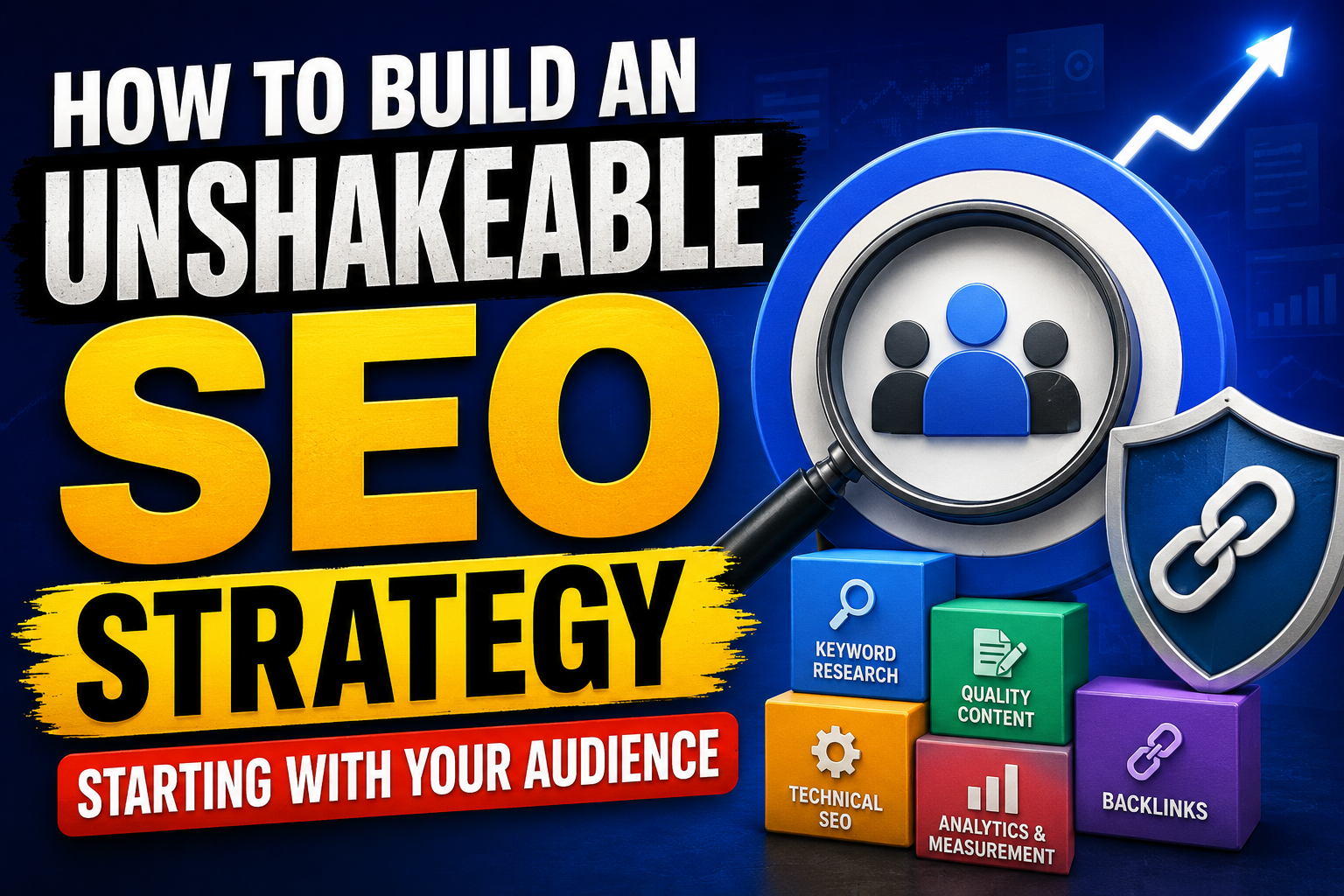
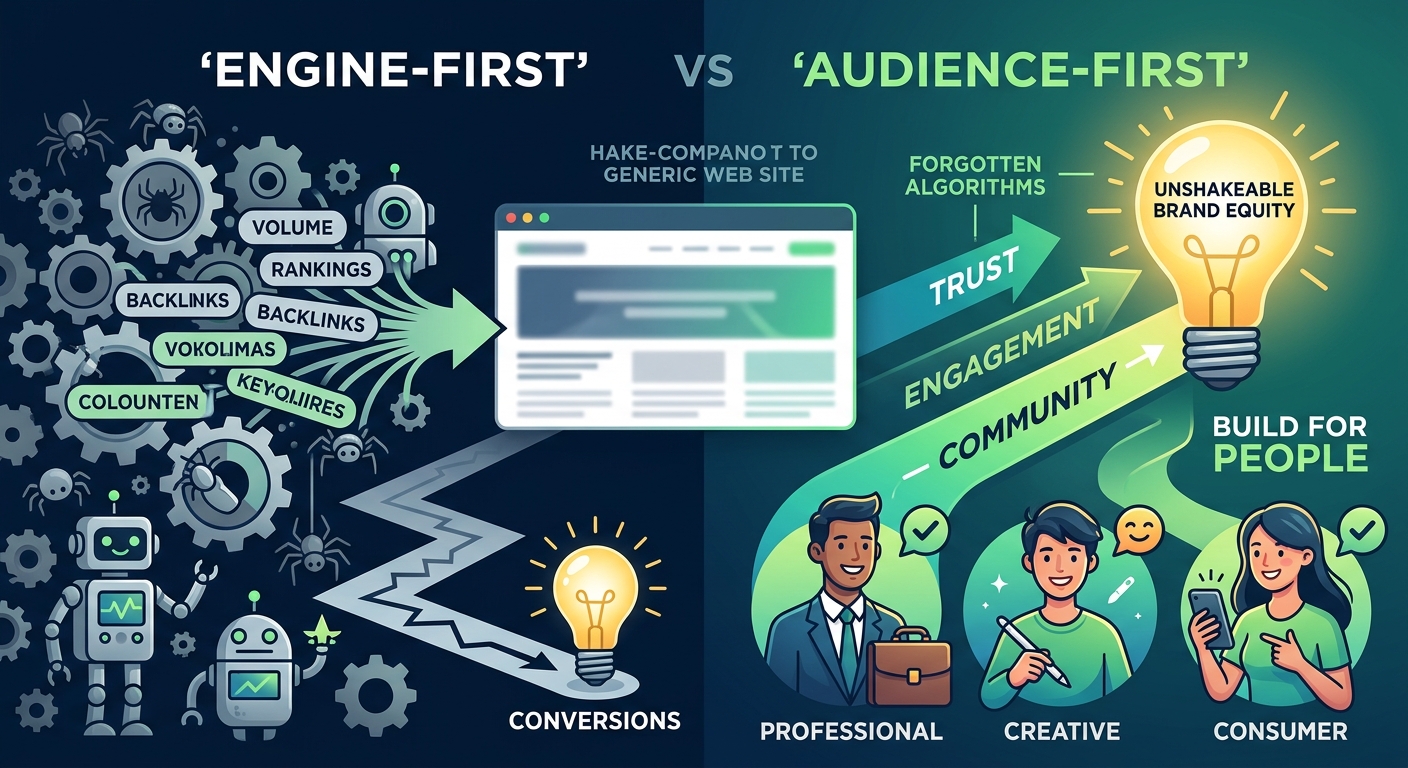
To build a resilient search presence today, you must treat SEO as a byproduct of brand affinity rather than an algorithmic formula. Algorithmic updates and AI-generated overviews constantly shift traditional rankings, but audience demand remains immune to search engine changes.
An audience-first strategy fundamentally prioritizes user intent and brand trust over technical manipulation.
Unshakeable SEO Strategy
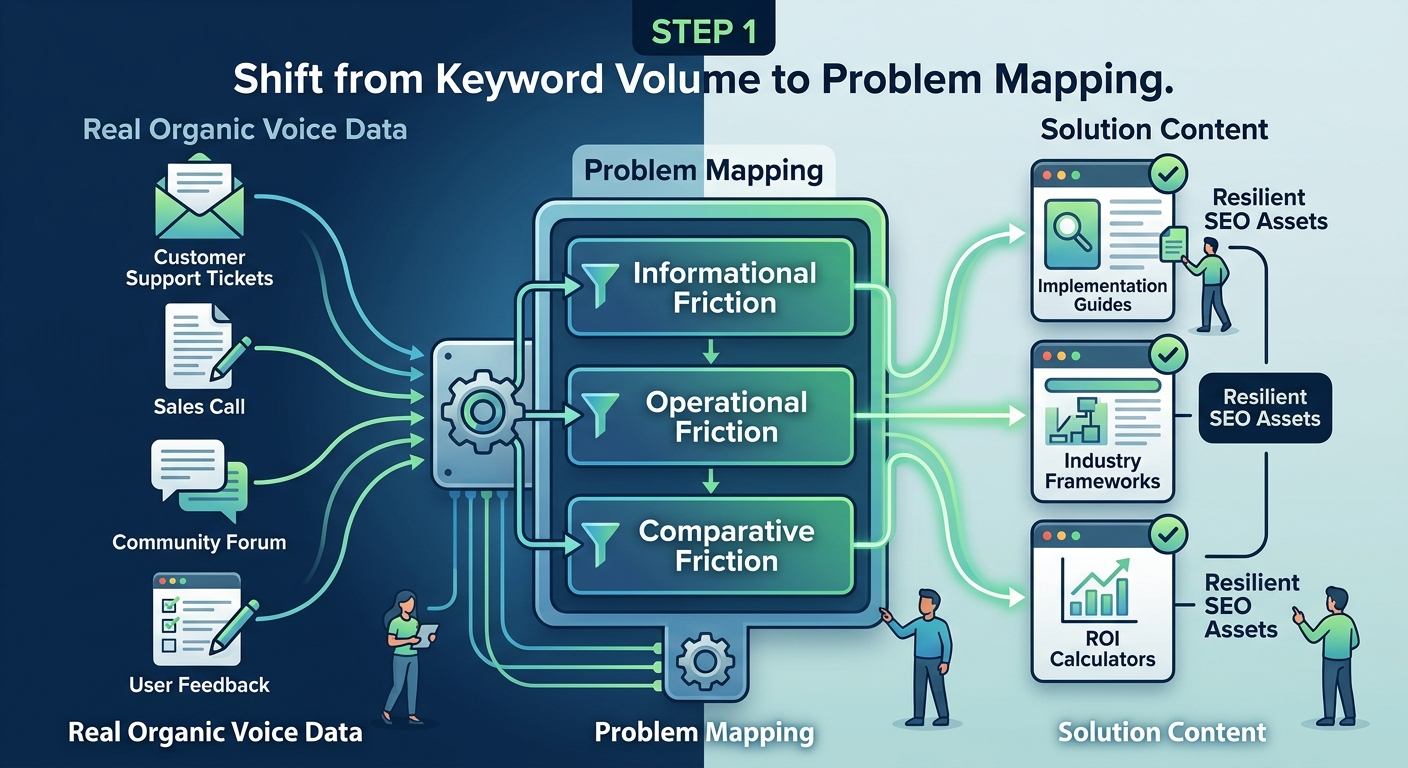
Step 1: Shift from Keyword Volume to Problem Mapping
Traditional keyword research focuses heavily on search volume. An audience-first strategy prioritizes intent patterns and customer friction points.
- Extract Organic Voice Data: Gather real phrasing from customer support tickets, sales calls, community forums, and user feedback. Look for the exact syntax your target audience uses when describing their challenges.
- Identify Core Intent Clusters: Group these insights into recurring functional and emotional needs:
- Informational Friction: What do they need to understand before making a choice?
- Operational Friction: What implementation barriers do they face?
- Comparative Friction: How do they differentiate between potential solutions?
- Build the Solution Map: Design content directly targeted at resolving those specific friction points, regardless of whether a high-volume keyword exists for them.
Step 2: Establish Subject Matter Expertise (E-E-A-T)
Search engines prioritize content that displays first-hand experience and unique perspective—qualities AI summaries cannot synthesize. When you build trust with a reader, they are more likely to perform a direct search for your brand.
- Integrate Proprietary Insights: Embed original research, primary data, internal case studies, or firsthand experience directly into your content.
- Feature Named Authors: Move away from generic brand publishing. Assign content to credible subject matter experts with transparent backgrounds and active industry presences.
- Provide Distinct Conclusions: Avoid repeating common industry advice. Offer a clear, reasoned opinion or counter-intuitive insight backed by your own domain experience.
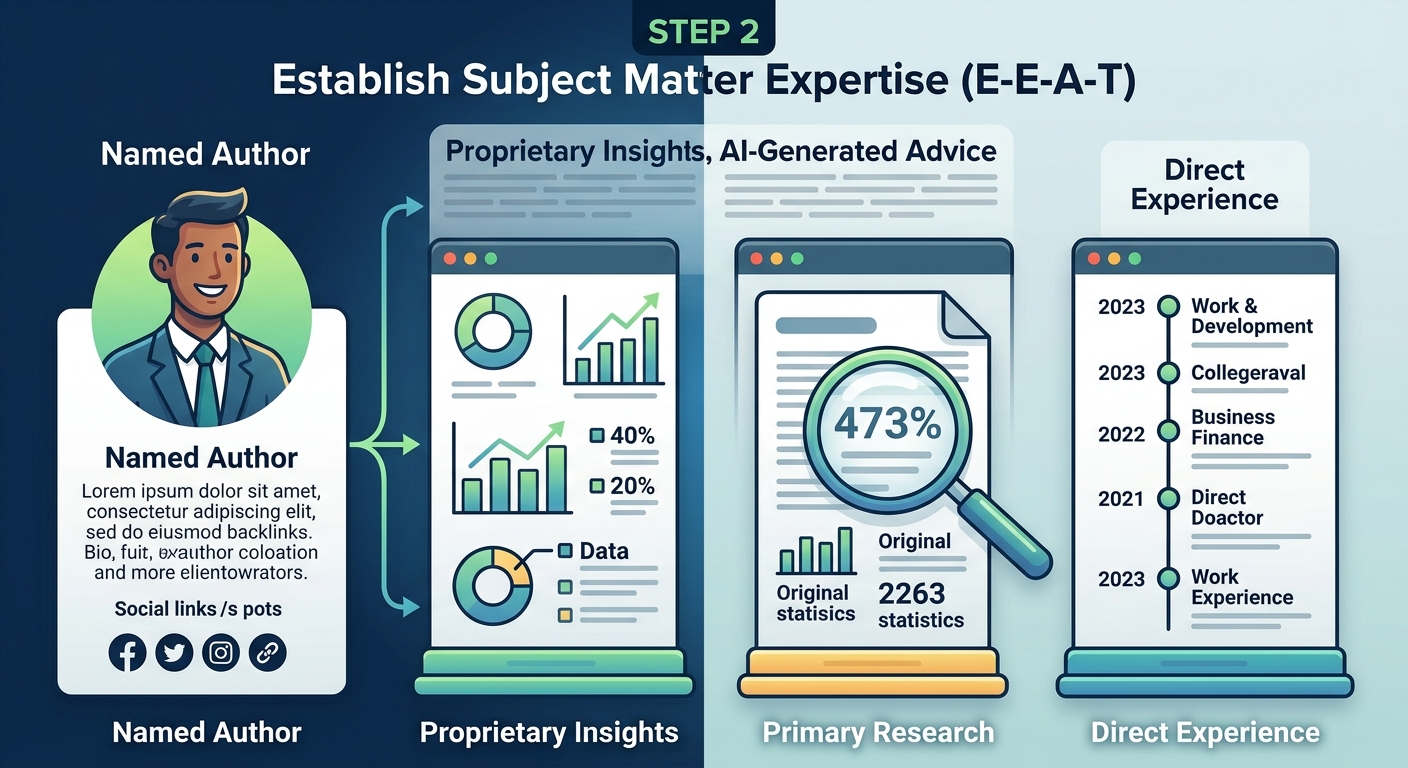
By highlighting unique insights and first-hand knowledge, you create content that AI cannot easily genericize.
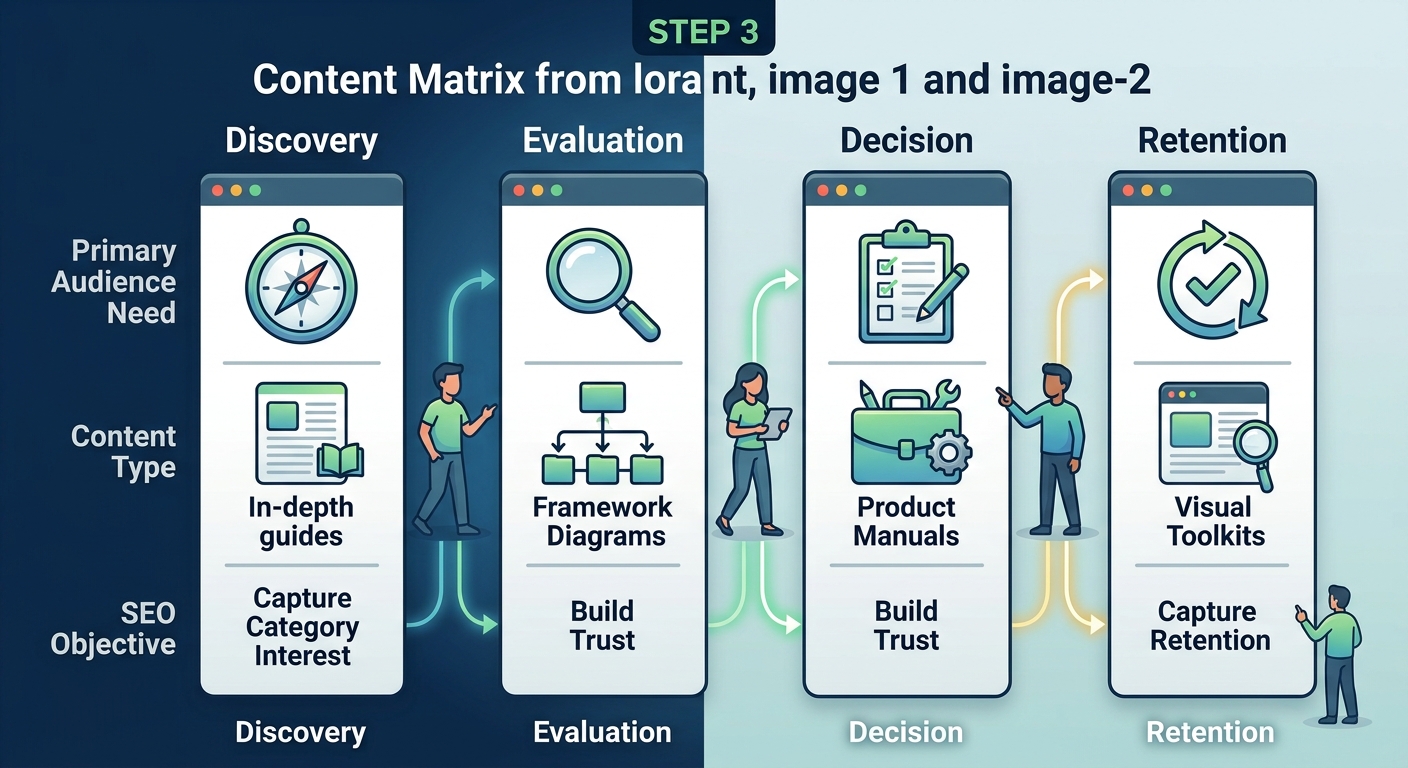
Step 3: Optimize for the Entire Audience Journey
An unshakeable strategy balances top-of-funnel awareness with deep, high-intent content that builds long-term retention. A linear path to conversion is rare; map your content to support users at every fluid stage.
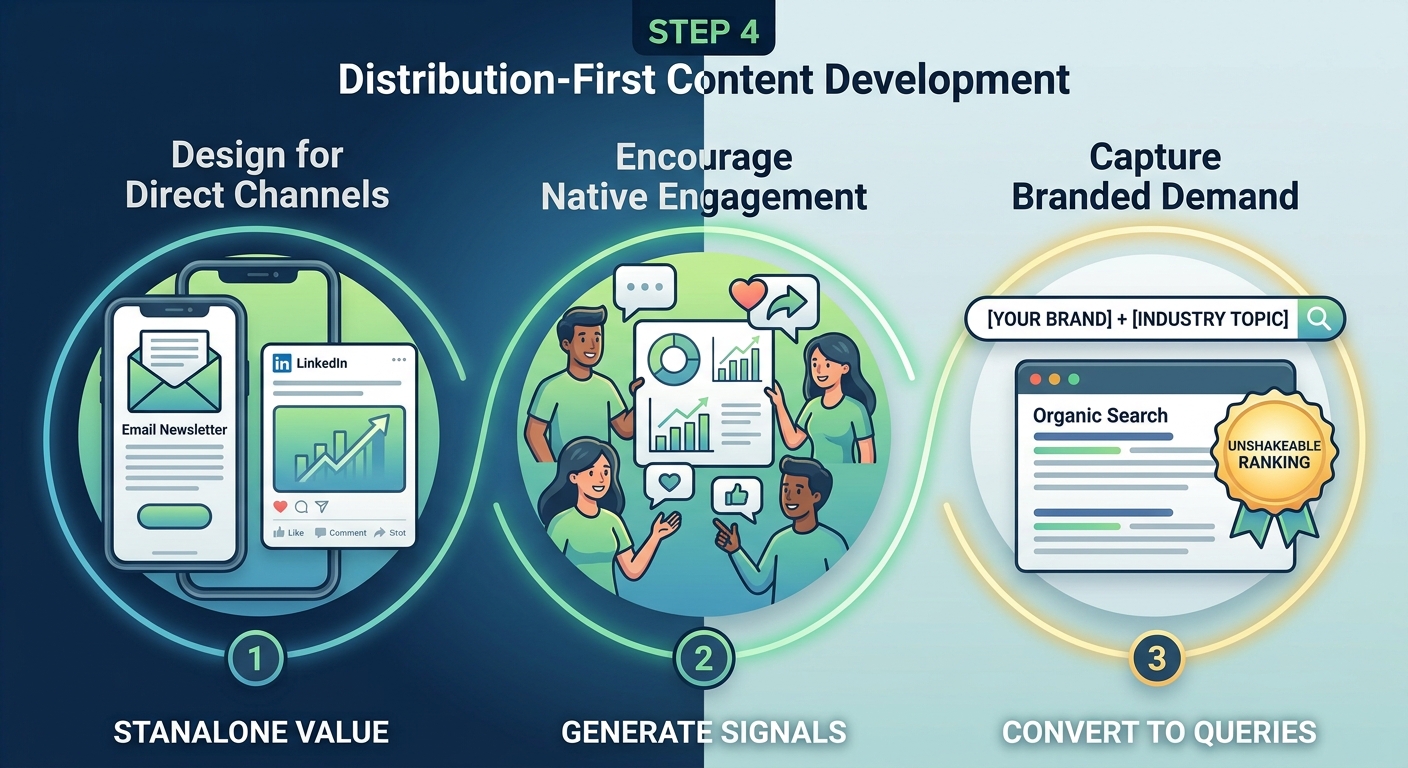
Step 4: Distribution-First Content Development
Content created solely for a search index rarely generates organic engagement. Build your content with multi-channel distribution in mind from day one, focusing on building an audience before relying on search traffic.
1.Design for Direct Channels:Ensure standalone value outside search.
Draft content so it provides immediate value when shared directly via email newsletters, professional communities, or social platforms without relying on search engine traffic. (See illustration in Step 2: how unique charts and research provide immediate hook value).
2.Encourage Native Engagement:Generate active user signals.
Format key insights into easily shareable quotes, charts, or visual summaries that invite discussion, comments, and direct shares across external platforms.
3.Capture Branded Demand:Convert audience affinity into direct queries.
As readers engage with your distribution channels and recognize your distinct expertise, they begin searching for your brand name alongside industry topics (e.g., “Brand Name + Topic”). This creates high-value branded search volume that algorithms cannot ignore.
Instead of chasing algorithms, this loop builds authority that search engines eventually must recognize.
Step 5: Measure True Audience Demand
Relying solely on keyword positions offers an incomplete picture of search health. Track metrics that reflect genuine brand equity and user preference.
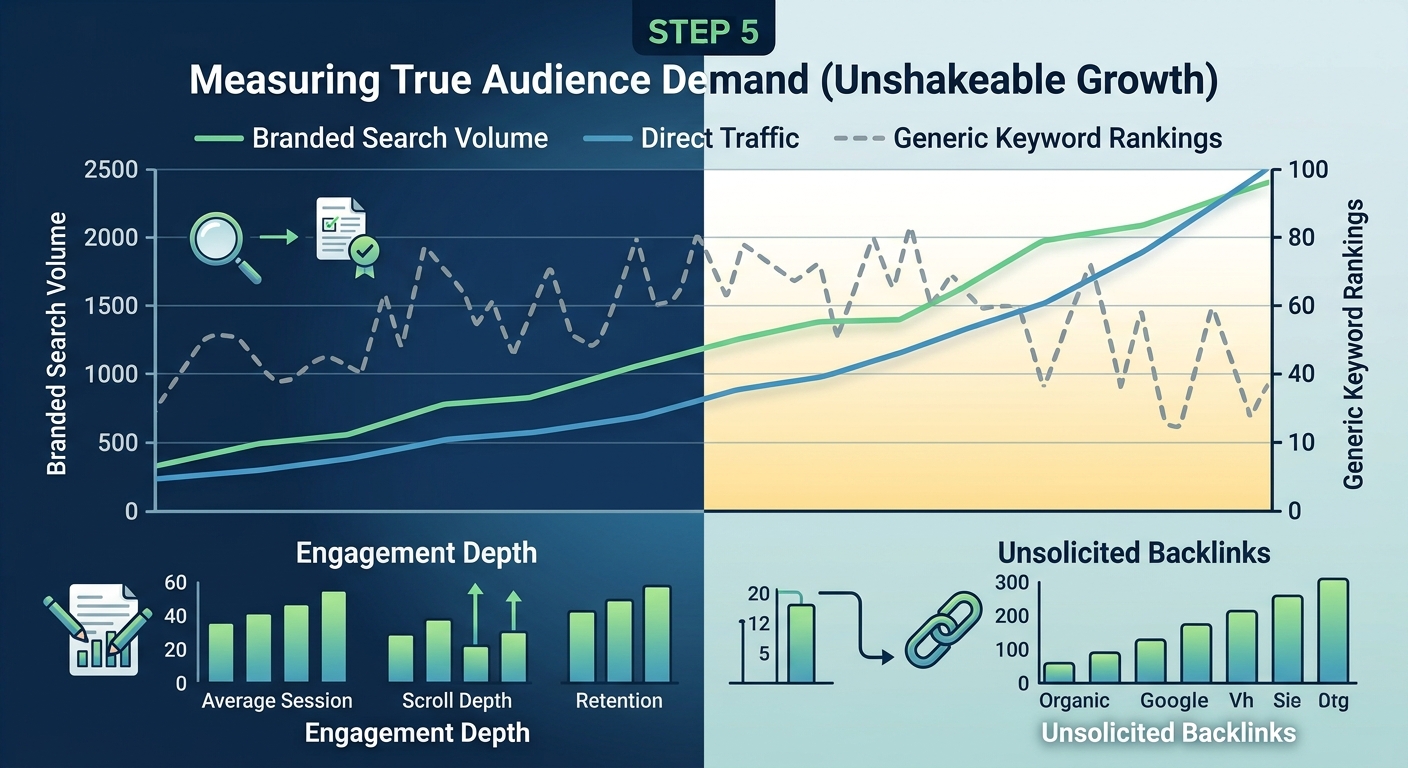
- Branded Search Volume: Monitor growth in search queries containing your brand name or proprietary product names over time. When unbranded keywords fluctuate due to updates, steady branded demand keeps visibility unshakeable.
- Direct Traffic: Track users visiting your site directly, signaling high recall and trust.
- Engagement Depth: Evaluate session duration, scroll depth, and return visit frequency on key content pages (indicators of strong E-E-A-T).
- Unsolicited Backlinks: Track organic link acquisition from industry publications referencing your unique research or perspectives.
The following graph illustrates how branded demand and direct traffic provide stable growth even when unbranded keyword visibility is volatile.
How do I audit and map my current content library to an audience-first SEO framework?
Auditing your content library through an audience-first lens shifts your focus from pure search volume to intent alignment, user engagement, and brand equity.
1. Categorize Your Content Library
Export your existing content URLs alongside traffic, conversion, and bounce data. Classify each piece using an audience-value matrix:
| Category | Signal / Indicator | Audience Value | Action Strategy |
| High Equity | Strong engagement, drives branded search, unique insights | High | Keep & Promote: Feature in newsletters, update regularly, use as internal linking hubs. |
| Shallow / Bot-First | Generic advice, high bounce rates, rehashed definitions | Low | Rewrite or Merge: Inject proprietary data and real experience, or consolidate thin posts into one authoritative asset. |
| Misaligned Traffic | High organic visits, zero conversions, wrong target audience | Low | Pivot or Prune: Re-angle the message toward your ideal customer, or redirect/de-index if completely irrelevant. |
| Content Gaps | Frequently asked in sales/support calls, but missing on site | High | Create New: Build dedicated resources addressing these specific friction points immediately. |
2. Map Content to Specific Customer Friction
Re-align every page to address a specific user roadblock rather than a generic keyword:
- Informational Friction: Upgrade basic “What is X?” articles into actionable guides that answer “How to evaluate if X fits your specific stack.”
- Operational Friction: Review posts covering implementation. Add downloadable templates, step-by-step checklists, or visual workflows to solve practical execution problems.
- Comparative Friction: Audit product or strategy comparison pages. Replace generic feature lists with transparent tradeoffs, pricing nuances, and real-world edge cases.
3. Inject Original E-E-A-T Signals
Run high-potential pages through an “un-synthesizable” check to ensure AI engines or generic competitors can’t easily replicate them:
- Add First-Hand Proof: Insert internal data, original quotes, process screenshots, or project case studies.
- Assign Verified Experts: Replace generic “Team” or “Admin” authors with credentials and links to named subject matter experts.
- State a Clear Perspective: Remove passive, neutral summaries and provide a clear, opinionated recommendation based on hands-on experience.
Would you like to walk through an example using one of your high-traffic or underperforming pages to see how we can restructure it?